KARANJA
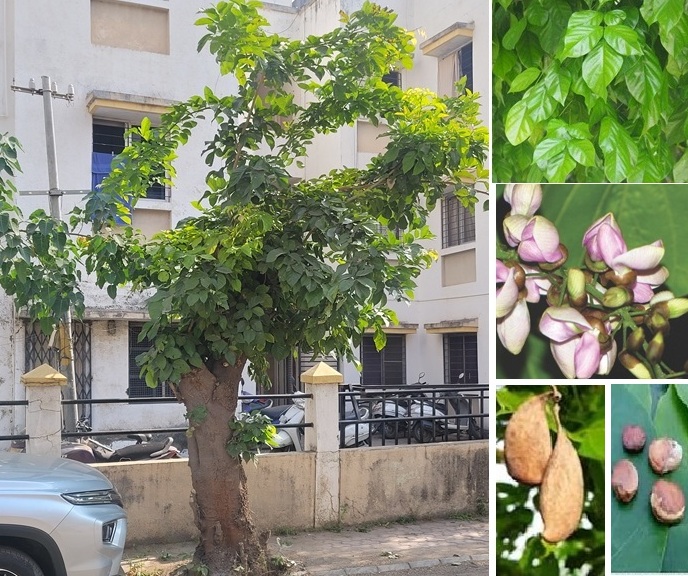
| संस्कृत: | करंज | ગુજરાતી: | કરંજ, કણઝી | |
| हिन्दी: | कंजा , डिठौरी | Binomial: | Pongamia Pinnata |
Introduction:
Karanja tree is an evergreen tree, grows wild, full of green leaves and wide branches hence found planted on both sides of roads to get shadow and beautification. Tree grows up to 70-75 feet high. Leaves are alternate, ovate or oblong, shiny and glossy. Flowers are small clusters of white, purple and pink. Seed pods are brown, thick walled and contains 1-2 bean shaped brown-red seeds. Leaves, seeds, bark and other parts of tree and Oil from seeds are used in Ayurveda.
Known as Pongamia Pinnata or Pongamia Glabra, Seeds oil is known as Pongamia oil.
Uses:
- Seed-Oil with camphor powder or paste of seeds adding turmeric is applied externally to cure eczema, dandruff, scabies and other skin infections.
- Karanja twigs have been used to brush teeth since ancient times, many households even use them today due to their anti-viral properties.
- Karanja bark is boiled, and decoction is used to clean wounds and ulcers.
- On insects and rat bites, fresh leaf juice is applied externally to get relief from swellings and pain.
- To get relief from conjunctivitis, take tender leaves, crush them and boil to get decoction. Wash infected eyes when the decoction is cold.
- Useful in treating hemorrhoids and fistula. Decoction is made using equal parts of karanja bark powder and Triphala powder. The decoction is used to wash the affected parts.