PUDINA
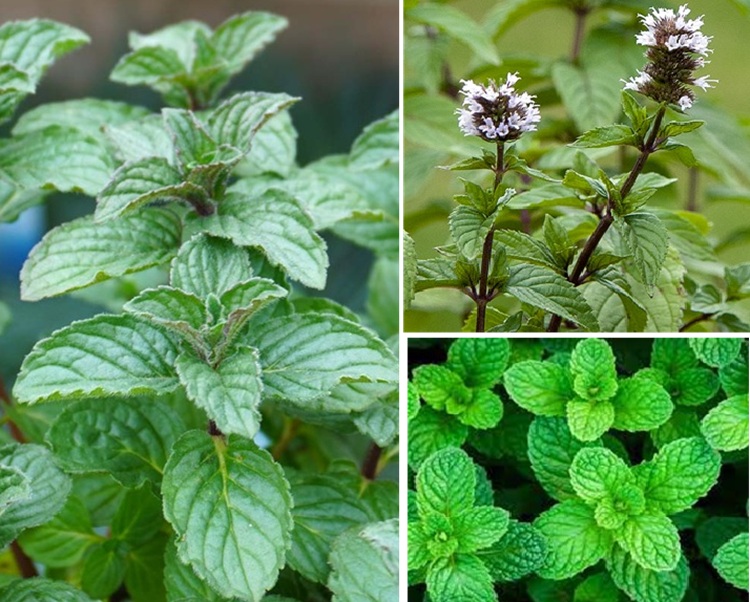
| संस्कृत: | पुदीन , रोचनी | ગુજરાતી: | ફૂદીનો | |
| हिन्दी: | पोदीना | Binomial: | Mentha Piperita |
Introduction:
Plants grow 1 to 2 feet in height with bright green leaves similar to Tulsi leaves, but small and round in shape. Stem is non woody and grows underground to give birth to a new plant. The flowers are small white lavender. The plant has strong odor. Many varieties of Pudina are found all over the world. Mentha sylvestris, Mentha arvensis etc. are wild varieties. Mantha Piperita, Mentha spicata etc. are commonly used as household herb and in Indian kitchens. Chutney and Tea adding pudina leaves is common in all Indian households.
Uses:
- Juice of leaves/pudina oil acts as a powerful carminative and given to relieve indigestion and colic pain. Also kills intestinal worms.
- Juice of leaves with fresh ginger juice is given to drink for relief in fever.
- Pudina leaves contain menthol, hence acts as a natural decongestant. Juice is given to clear nasal passage, in sore throat, cough, asthma etc.
- Fresh paste of leaves is applied to treat skin diseases like acne, rashes, itching, eczema etc. and also externally on inflammation and pain relief.
- Chew fresh leaves or gargle with decoction of leaves to fight bad breath and oral bacteria.
- Apply diluted pudina oil to temple or inhale vapor, adding few drops of oil to relieve headache, migraine and to reduce stress and anxiety.
- Leaves juice is given to treat diarrhea.