ARISHTAKA
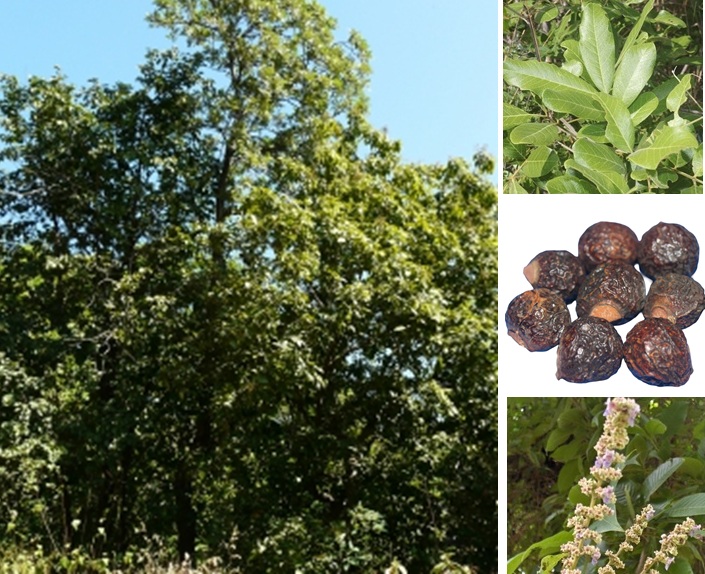
| संस्कृत: | अरिष्टक, फेनिल | ગુજરાતી: | અરીઠા | |
| हिन्दी: | रीठा, फेनिल | Binomial: | Sapindus trifoliates |
Introduction:
Arishtaka, also known as Soapnut, is found on deciduous large trees growing all over India. There are two varieties of this tree known as Sapindus trifoliates and Sapindus mukorossi. The second variety is found in Northern parts of India. It has compound leaves, the flowers are small, yellowish-green, and the fruit is round, hard, with rough texture. The fruit contains seeds that are surrounded by a pulp, when crushed, produces a soapy substance which is used as a natural detergent or shampoo. Fruit, leaves and bark are used in various Ayurvedic preparations. Jewelers use it to clean ornaments with its soapy water. Also used to clean the clothes and delicate fabric.
Uses:
- Arishtaka fruits are used to remove poisonous effects of food and other substances and for insect bites. Seeds are crushed and soaked in water for some time. Water is then given for drinking, which induces vomiting to reduce poisonous effects.
- On enlarged abdomen, Soapnut water is administered internally, and soapy water is applied externally on belly.
- To remove cough in asthma and similar conditions, bark or fruit marrow is boiled in water, and few drops are administered.
- Prepare a paste of leaves and add to sesame oil. Heat till water evaporates, cool it. Apply this oil on lesions of eczema for relief.
- On herpes, wounds and burning sensation of feet after walking, prepare decoction of fruits/bark and apply soapy water externally. Keep it for some time and wash it thereafter.
- Arishtaka is used in preparation of soaps and shampoo to wash hair. Arishtaka powder alongwith Shikakai powder is used to wash hair and to prevent dandruff.
Caution: Not to be used internally during pregnancy. Overdoses to be avoided.